Maps - Sirah

The Sirah is not merely a story in time; it is a drama in space. The message of Islam was not revealed in a vacuum but in the crucible of the Arabian Peninsula’s harsh deserts, its nascent trade routes, its tribal territories, and its sacred enclaves. Enter —a conceptual and digital tool that reimagines the prophetic biography through the lens of spatial humanities. These maps are not simple illustrations; they are hermeneutic devices that unlock new layers of meaning, revealing the strategic, spiritual, and social geometries of early Islam. Part I: The Pre-Islamic Cartography of the Hejaz To understand a Sirah Map, one must first understand the mental map of a 7th-century Qurayshi. The Arabian Peninsula was a world defined by two competing cartographies: the trade map and the tribal map .

First, the route itself. The famous journey of the Prophet and Abu Bakr, hiding in the Cave of Thawr (south of Mecca) before darting north-west, is not arbitrary. A topographical map of the Sarawat Mountains shows that Thawr lay off the main trade routes, a dead zone invisible to Qurayshi search parties. The map also highlights the coastal route versus the inland mountain path. The fact that they employed Abdullah ibn Urayqit, a pagan expert navigator, as a guide underscores that the Hijra was a masterclass in applied geography.

Second, the destination. Yathrib, later al-Madinah al-Nabawiyya (the City of the Prophet), was a spatial anomaly: a date-palm oasis fractured by tribal warfare (Aws and Khazraj) and dominated by three Jewish tribes (Banu Qaynuqa, Banu Nadir, Banu Qurayza). A Sirah Map of Medina’s harra (lava fields) and its fortified amwal (date-palm estates) reveals why the Prophet chose to build his mosque not in the commercial centre, but at the edge of two tribal territories. The mosque became a neutral piazza , a new sacred centre designed to suture a broken landscape. Perhaps the most dramatic application of Sirah Maps is in the military campaigns. Without spatial awareness, the battles of the Sirah appear as heroic skirmishes. With a map, they become lessons in tactical genius. sirah maps

A map of the wells of the Hejaz shows that Badr was not random—it was the only major water source between Mecca and the Levant. The Prophet arrived first and occupied the northern wells, creating a classic "interior lines" strategy. When the Quraysh army arrived from the south, they found the water poisoned or controlled. The map explains the victory better than any theological treatise: control of hydrology dictated control of battle.

Simultaneously, the tribal map was a fluid patchwork of diyar (homelands), water rights, and blood-feud territories. The Sirah is replete with spatial triggers: the sacrilegious murder during the Fijar wars, the alliances of Hilf al-Fudul , and the critical concept of jiwar (neighbourly protection). A Sirah Map that visualizes tribal boundaries explains why the Prophet, after the devastating year of grief (loss of Khadija and Abu Talib), sought refuge not just in any town, but in Ta’if—only to be rejected by its tribal elite. The map shows that Ta’if belonged to the rival Thaqif confederacy, a different political ecology. Spatial thinking transforms biographical events from personal tragedies into geopolitical realities. The Hijra (622 CE) is conventionally taught as a migration from Mecca to Yathrib. But a Sirah Map reveals it as an act of cartographic subversion . The Sirah is not merely a story in

Introduction: The Problem with Linear Narrative For centuries, the study of the Sirah —the prophetic biography of Muhammad ibn Abdullah—has been dominated by a textual, chronological approach. Scholars like Ibn Ishaq, al-Tabari, and Ibn Hisham meticulously arranged events year by year: the Year of the Elephant, the first revelation, the Hijra, the Battles of Badr and Uhud, the Conquest of Mecca. This linear model is invaluable for historical sequencing, but it often obscures a more profound dimension of the prophetic mission: geography .

The trade map was a necklace of oases and towns stretching from Yemen to Syria. Mecca was not a natural geographic hub—it lacked fertile soil or a permanent river. Instead, it was a trading post , leveraging the haram (sacred sanctuary) that allowed commerce to flow during pilgrimage months. Sirah Maps that overlay the caravan routes of Quraysh (north to Gaza, south to Sana’a, east to al-Hira) reveal a critical insight: the early Muslim community was economically besieged. The boycott of Banu Hashim (616–619 CE) was not just a social sanction; it was a cartographic strangulation, cutting Mecca’s commercial arteries. These maps are not simple illustrations; they are

The Persian military engineer Salman al-Farsi suggested digging a trench ( khandaq ) across the exposed northern approach to Medina. A geological map of Medina explains why this was revolutionary: the city was naturally defended on all sides by lava fields ( harra ) except for a 500-meter gap in the north. The trench artificially extended the natural topography. The Qurayshi cavalry, masters of open-field warfare, were rendered useless. Sirah Maps show that the Battle of the Trench was not a miracle of divine intervention alone; it was a miracle of applied geospatial intelligence. Part IV: The Sacred Cartography of Pilgrimage The final layer of the Sirah Map is the ritual one. The Hajj and Umrah are re-enactments of prophetic geography. When the Prophet performed the Farewell Pilgrimage (632 CE), he was retracing the steps of Ibrahim (Abraham) and Hajar.

A topographic map of Mount Uhud reveals the fatal flaw. The Prophet positioned 50 archers on a small hill (Jabal al-Rumah) to guard the Muslim flank. But the map shows that the hill’s line-of-sight was limited. When the archers saw the Meccan cavalry retreating, they assumed victory and descended—exactly as Khalid ibn al-Walid, the Meccan commander, had gambled. The map does not absolve human error; it spatializes it.


Audio Mastering with AI is here.

How does it work?

The moment you upload a track, MasteringBOX starts extracting its audio features to provide a personalized audio mastering experience.

Mastering Made Easy with a simple 3-step process.

Analyze

MasteringBOX's algorithm analyzes the dynamic and spectral characteristics of your track to determine the best settings for mastering.

MasteringBOX's algorithm analyzes the dynamic and spectral characteristics of your track to determine the best settings for mastering.

Master

Based on the data gathered earlier, MasteringBOX carefully processes your track to make the most of it.

Based on the data gathered earlier, MasteringBOX carefully processes your track to make the most of it.

Listen

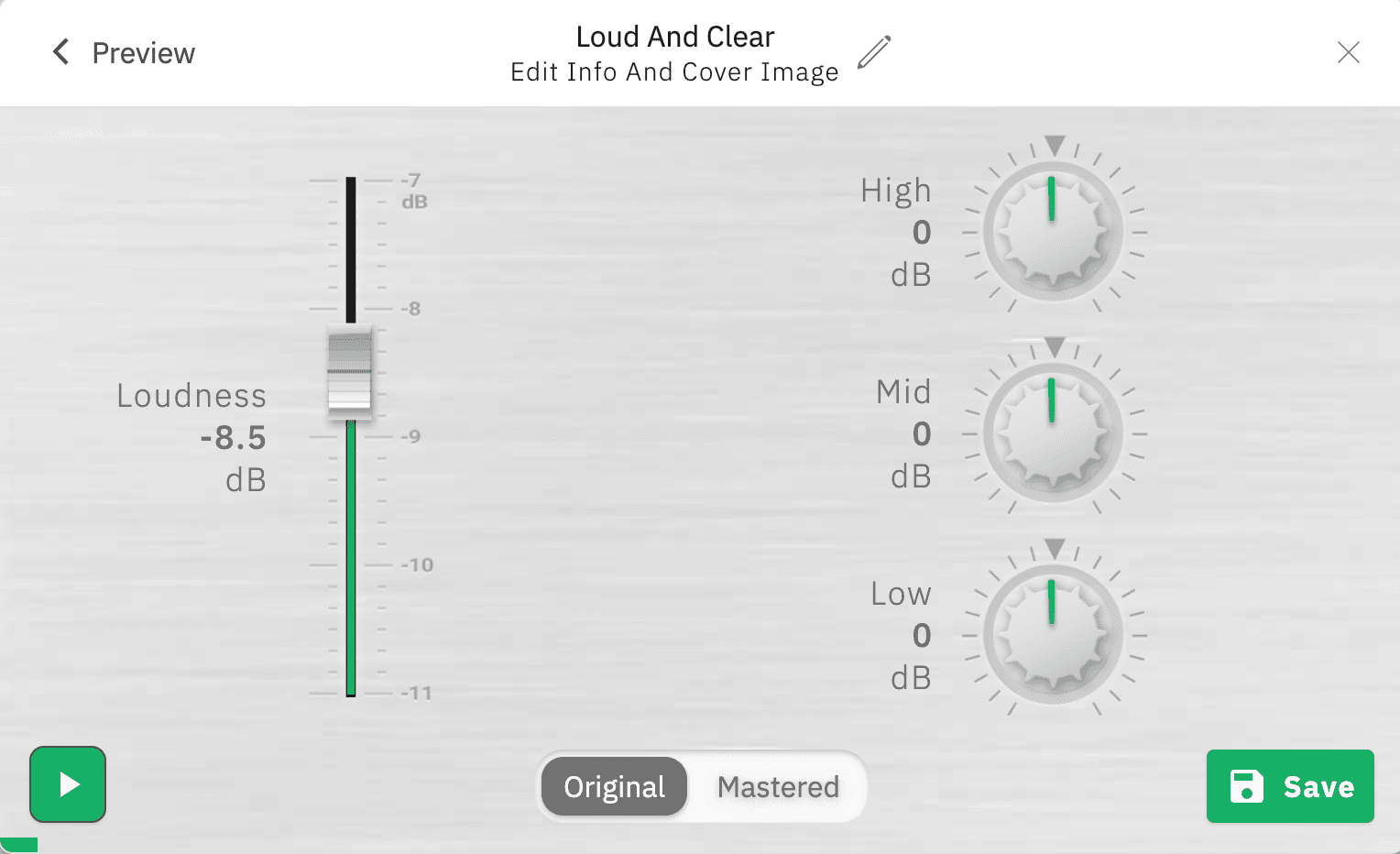
Preview your track and fine-tune the parameters to your liking before saving the final master. loudness and EQ control are available.

Preview your track and fine-tune the parameters to your liking before saving the final master. loudness and EQ control are available.

Start Now
Overlay

Explore

Feature-Packed Mastering App

Easily control the result of your track with simple controls, MasteringBOX does the work for you. Mastering has never been easier, faster and accessible.

Preview your track before saving your master.
Customizable

Preview your track and fine-tune your master

Adjust the loudness and EQ Controls to achieve the perfect result. Balance the sound and loudness across the tracks in your album.

  • Loudness Control

  • 3 Band dynamic EQ Control

  • Compare the mastered and original versions

  • Re-master your track for no extra cost as much as you want

Preview your track before saving your master.
New Features

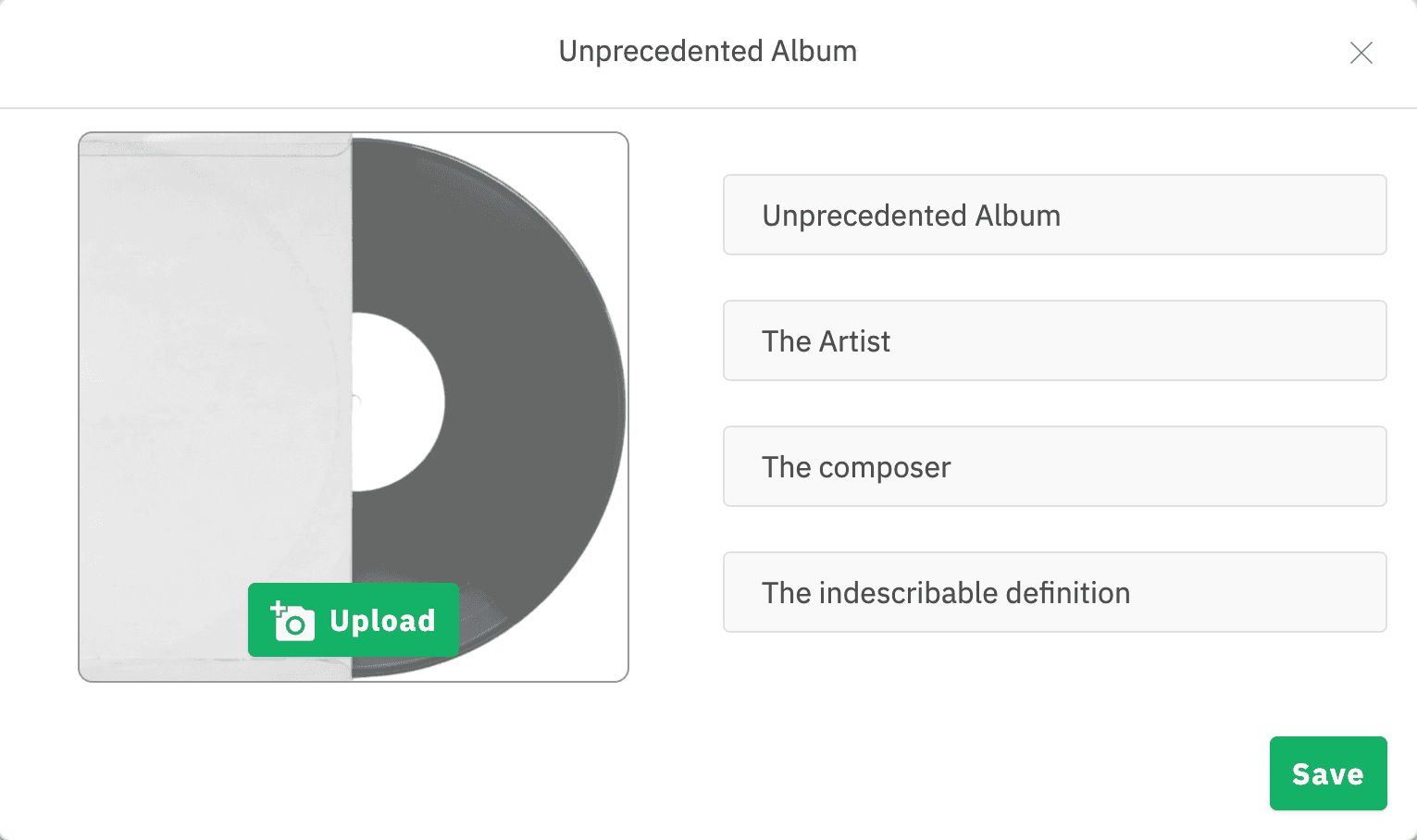
Add Track and Album information, and upload a Cover Image.

Create folders to group your albums or projects. Enjoy features for albums.

  • Export the album as a DDP 2.0 Master File (beta)

  • Download all the tracks in the album as a ZIP File

  • Set the album info and cover art for all the tracks in the project

Preview your track before saving your master.
Shareable

Share your tracks with your friends

Display your talents on MasteringBOX and enjoy these features:

  • Modern audio player where people can comment, give a like and share your songs and albums

  • An Artist profile where you can add your Bio, Pictures, Tracks and Albums

  • Top artists will get Featured on the homepage

Preview your track before saving your master.
For all devices

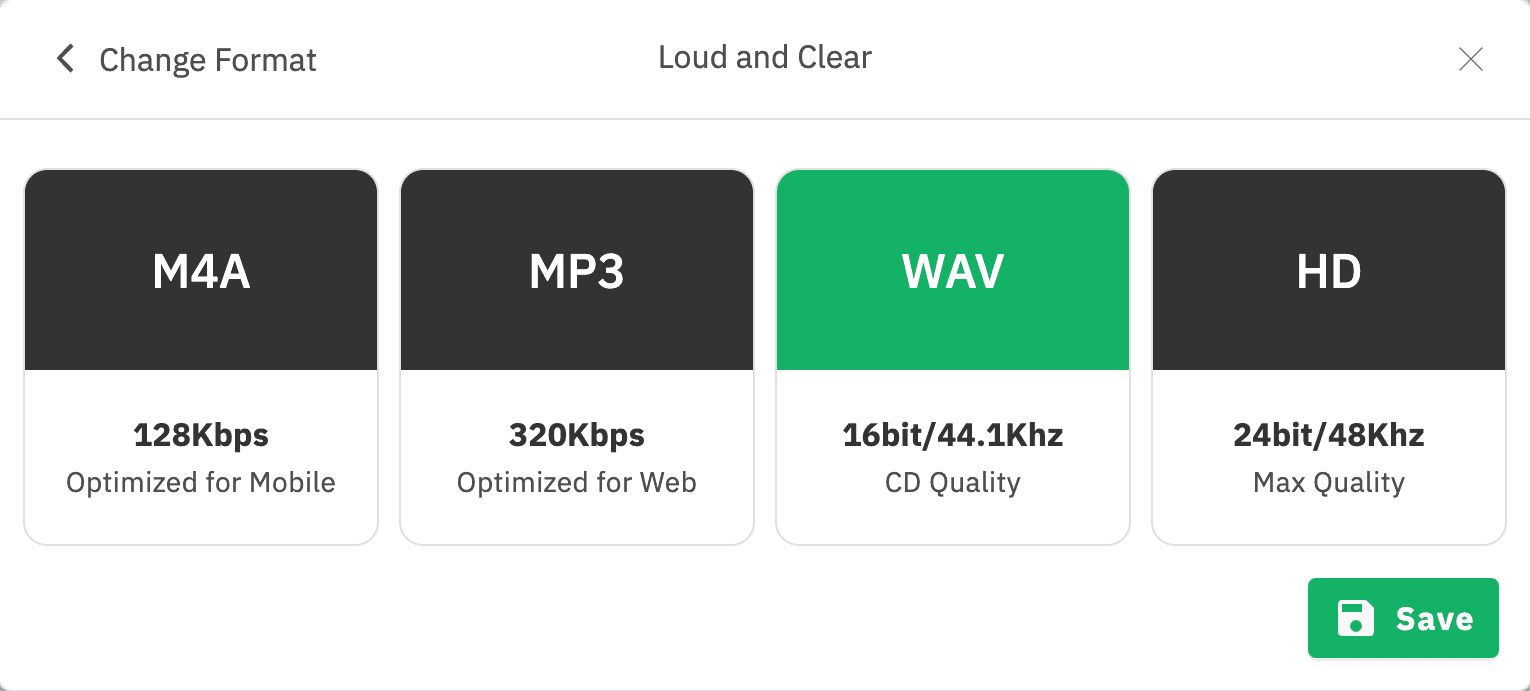
Download your track in multiple formats

Every device, every platform, every situation is different. You'll need resources.

  • Download your master in M4a, MP3, WAV and HD WAV

  • You can download the same master in multiple formats

  • Embed your cover art and track info - Compatible with M4a and Mp3.

Overlay

Featured

Packed with features to help you succeed

MasteringBOX eases the mastering process with a fully-featured app

Amazing sound

MasteringBOX provides better sound and proper loudness to your mix with an easy to use service. You can achieve great results that can compare to professional studio work.

Lightning fast

Master your track instantly, or master your full album all together within minutes. Our system provides a fast and high-quality mastering process.

Affordable

We provide professional mastering with affordable prices. Get one free master per day or upgrade to one of our premium plans for unlimited mastering.

Share your Tracks

Publish your tracks on MasteringBOX so your friends can play, comment, like and share your songs.

Easy to use

An intuitive interface that you will love using. With simple guides to make the process accessible to everyone

Less time & money

Stop spending time & money mastering your tracks, and focus on your music.

Start Mastering

The Sirah is not merely a story in time; it is a drama in space. The message of Islam was not revealed in a vacuum but in the crucible of the Arabian Peninsula’s harsh deserts, its nascent trade routes, its tribal territories, and its sacred enclaves. Enter —a conceptual and digital tool that reimagines the prophetic biography through the lens of spatial humanities. These maps are not simple illustrations; they are hermeneutic devices that unlock new layers of meaning, revealing the strategic, spiritual, and social geometries of early Islam. Part I: The Pre-Islamic Cartography of the Hejaz To understand a Sirah Map, one must first understand the mental map of a 7th-century Qurayshi. The Arabian Peninsula was a world defined by two competing cartographies: the trade map and the tribal map .

First, the route itself. The famous journey of the Prophet and Abu Bakr, hiding in the Cave of Thawr (south of Mecca) before darting north-west, is not arbitrary. A topographical map of the Sarawat Mountains shows that Thawr lay off the main trade routes, a dead zone invisible to Qurayshi search parties. The map also highlights the coastal route versus the inland mountain path. The fact that they employed Abdullah ibn Urayqit, a pagan expert navigator, as a guide underscores that the Hijra was a masterclass in applied geography.

Second, the destination. Yathrib, later al-Madinah al-Nabawiyya (the City of the Prophet), was a spatial anomaly: a date-palm oasis fractured by tribal warfare (Aws and Khazraj) and dominated by three Jewish tribes (Banu Qaynuqa, Banu Nadir, Banu Qurayza). A Sirah Map of Medina’s harra (lava fields) and its fortified amwal (date-palm estates) reveals why the Prophet chose to build his mosque not in the commercial centre, but at the edge of two tribal territories. The mosque became a neutral piazza , a new sacred centre designed to suture a broken landscape. Perhaps the most dramatic application of Sirah Maps is in the military campaigns. Without spatial awareness, the battles of the Sirah appear as heroic skirmishes. With a map, they become lessons in tactical genius.

A map of the wells of the Hejaz shows that Badr was not random—it was the only major water source between Mecca and the Levant. The Prophet arrived first and occupied the northern wells, creating a classic "interior lines" strategy. When the Quraysh army arrived from the south, they found the water poisoned or controlled. The map explains the victory better than any theological treatise: control of hydrology dictated control of battle.

Simultaneously, the tribal map was a fluid patchwork of diyar (homelands), water rights, and blood-feud territories. The Sirah is replete with spatial triggers: the sacrilegious murder during the Fijar wars, the alliances of Hilf al-Fudul , and the critical concept of jiwar (neighbourly protection). A Sirah Map that visualizes tribal boundaries explains why the Prophet, after the devastating year of grief (loss of Khadija and Abu Talib), sought refuge not just in any town, but in Ta’if—only to be rejected by its tribal elite. The map shows that Ta’if belonged to the rival Thaqif confederacy, a different political ecology. Spatial thinking transforms biographical events from personal tragedies into geopolitical realities. The Hijra (622 CE) is conventionally taught as a migration from Mecca to Yathrib. But a Sirah Map reveals it as an act of cartographic subversion .

Introduction: The Problem with Linear Narrative For centuries, the study of the Sirah —the prophetic biography of Muhammad ibn Abdullah—has been dominated by a textual, chronological approach. Scholars like Ibn Ishaq, al-Tabari, and Ibn Hisham meticulously arranged events year by year: the Year of the Elephant, the first revelation, the Hijra, the Battles of Badr and Uhud, the Conquest of Mecca. This linear model is invaluable for historical sequencing, but it often obscures a more profound dimension of the prophetic mission: geography .

The trade map was a necklace of oases and towns stretching from Yemen to Syria. Mecca was not a natural geographic hub—it lacked fertile soil or a permanent river. Instead, it was a trading post , leveraging the haram (sacred sanctuary) that allowed commerce to flow during pilgrimage months. Sirah Maps that overlay the caravan routes of Quraysh (north to Gaza, south to Sana’a, east to al-Hira) reveal a critical insight: the early Muslim community was economically besieged. The boycott of Banu Hashim (616–619 CE) was not just a social sanction; it was a cartographic strangulation, cutting Mecca’s commercial arteries.

The Persian military engineer Salman al-Farsi suggested digging a trench ( khandaq ) across the exposed northern approach to Medina. A geological map of Medina explains why this was revolutionary: the city was naturally defended on all sides by lava fields ( harra ) except for a 500-meter gap in the north. The trench artificially extended the natural topography. The Qurayshi cavalry, masters of open-field warfare, were rendered useless. Sirah Maps show that the Battle of the Trench was not a miracle of divine intervention alone; it was a miracle of applied geospatial intelligence. Part IV: The Sacred Cartography of Pilgrimage The final layer of the Sirah Map is the ritual one. The Hajj and Umrah are re-enactments of prophetic geography. When the Prophet performed the Farewell Pilgrimage (632 CE), he was retracing the steps of Ibrahim (Abraham) and Hajar.

A topographic map of Mount Uhud reveals the fatal flaw. The Prophet positioned 50 archers on a small hill (Jabal al-Rumah) to guard the Muslim flank. But the map shows that the hill’s line-of-sight was limited. When the archers saw the Meccan cavalry retreating, they assumed victory and descended—exactly as Khalid ibn al-Walid, the Meccan commander, had gambled. The map does not absolve human error; it spatializes it.

Try for Free Now

Latest Articles

Our Latest Articles about Audio Mastering, Music Production, Audio Mixing, Recording and other audio related topics

Show more

Maps - Sirah

We respond to the most frequently asked questions about MasteringBOX. Please read these questions before reaching to us.

What is Audio Mastering?

Audio Mastering is the final stage of the audio production process wherein recordings are optimized for release, increasing the overall sound quality and loudness via equalization, multi-band compression, peak limiting, dithering, and other processes. We recommend reading our article fully explaining what is mastering

Do all songs need Mastering?

Yes, you should master all your tracks before release. Even if you are working on a demo, mastering will help the improve overall sound and loudness. MasteringBOX can help you master your tracks in minutes to always get the best our of your projects, hassle free.

How should I prepare my track for mastering?

We have created an article to guide you on how to prepare your track for mastering. We recommend that you read it before exporting your mix for mastering.

How can a machine master my track?

MasteringBOX is designed by professional sound engineers with years of experience. We've created a smart artificial intelligence that detects the dynamic and spectral characteristics of the track and applies the appropriate adjustments.

What is the difference between Mixing and Mastering?

Audio Mixing is the stage where you process each of your individual tracks or instruments separately. They you combine them into a singular stereo mixdown ready for mastering. Audio Mastering is where the stereo mixdown is enhanced, balanced, and adjusted to ensure continuity across sound systems as well as an industry-standard, release-ready sound. Want to know more? Read our article about the differences between mixing and mastering.

Should I use MasteringBOX or hire a Mastering Engineer?

MasteringBOX does not necessarily compete with professional mastering studios. Indeed, it may not quite achieve the same balanced sound that a talented mastering engineer can achieve in a suitably-equipped professional mastering studio. MasteringBOX is, however, a sophisticated mastering tool — one that is fast, easy to use, and affordable. As such, why not try MasteringBOX? Mastering engineers are always available at significantly higher rates to anyone not satisfied with its results, after all.

What is the refund policy?

We have a 14-day satisfaction guaranteed refund policy. If you are not satisfied and you have mastered less than 3 tracks with your premium account we will refund your order.

I forgot to cancel my plan and I got charged for the next period. Can I get a refund?

We give a 14-day grace period. You are eligible for a refund if you contact us within that time, as long as you haven't used the premium features during that time.

How can I cancel my subscription?

You can cancel your subscription from your account. Go to billing & plan and click on cancel. You can still use the premium features until the pre-paid period ends. You can reactivate the automatic renewal before the subscription expires.

Show more

Start Mastering Now

Stop spending time & money mastering your tracks, and focus on your music.

Start Mastering For Free
MasteringBOX © 2025
Terms of ServiceData PolicyCookies PolicyPricingLearn